August 2026

Agriculture News

Horticulture Development in Virudhunagar

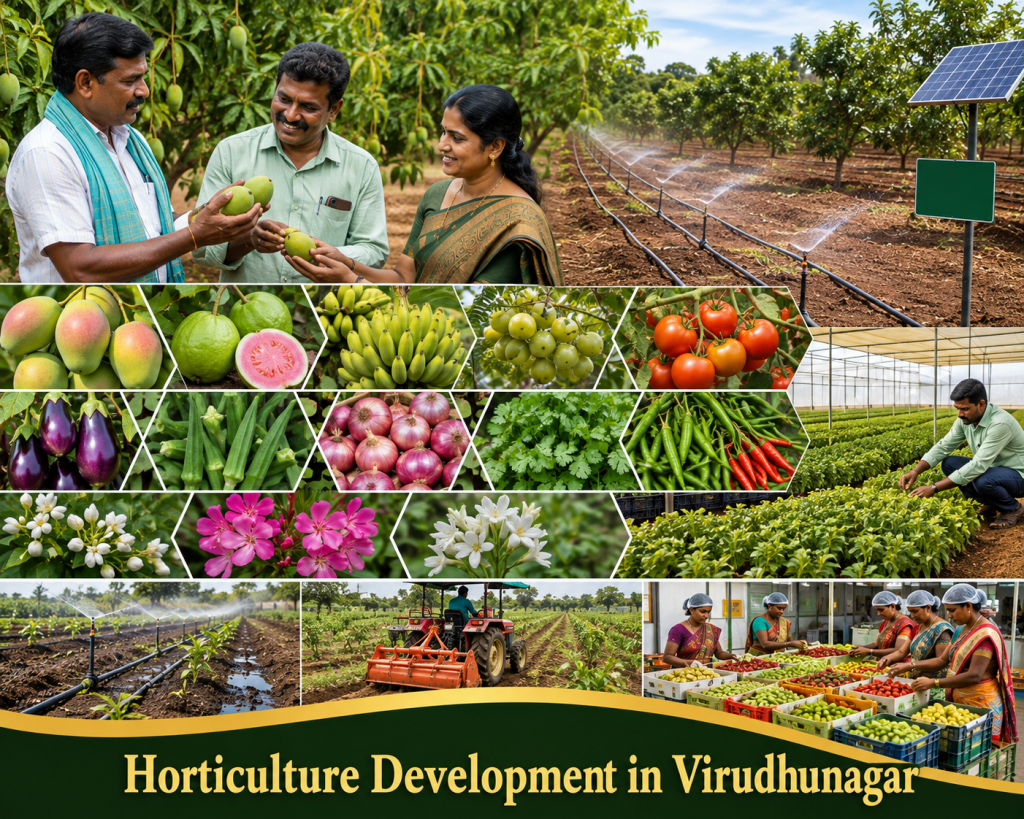
Horticulture is an important part of Virudhunagar district’s agricultural economy. According to the Virudhunagar District Administration, around 13,590 hectares of land are under various horticultural crops. The district grows a diverse combination of fruits, vegetables, spices and flowers. Major horticultural crops The district’s horticulture sector includes: Fruit crops Vegetable crops Spices and condiments Flower crops This crop diversity allows farmers to cultivate crops suited to different soil, water and market conditions. Main objective of the Horticulture Department The department’s stated objective is to double production and triple farmers’ income. To achieve this, it promotes improved cultivation technologies, better planting material, efficient irrigation, mechanisation and post-harvest practices. The approach focuses not merely on increasing cultivated area, but also on improving productivity, quality and profitability. 1. Micro-irrigation One of the major interventions is micro-irrigation under the “Per Drop More Crop” component of the Pradhan Mantri Krishi Sinchayee Yojana (PMKSY). Micro-irrigation delivers water more efficiently to the crop’s root zone. The district administration states that it can improve water-use efficiency by approximately 40–60%. It also allows fertilisers to be supplied through irrigation water, helping improve fertiliser-use efficiency. Other benefits include: Tamil Nadu provides particularly strong subsidy support for micro-irrigation: the district administration states that small and marginal farmers can receive 100% subsidy, while other farmers are eligible for 75% subsidy, subject to the applicable scheme conditions. 2. High-tech horticulture The department encourages farmers to adopt Hi-Tech Horticulture techniques. These include: Protected cultivation can help farmers create a more controlled growing environment and is particularly useful for suitable high-value crops. 3. Quality planting materials and hybrid seeds Improving the quality of planting material is another major component. The department promotes: The district’s State Horticulture Farms produce and distribute planting materials to farmers, including hybrid vegetable seedlings. These seedlings are made available at subsidised rates to encourage vegetable cultivation and increase production. 4. State Horticulture Farms Virudhunagar has two State Horticulture Farms. State Horticulture Farm, Poovani is located between Krishnan Kovil and Srivilliputhur. State Horticulture Farm, Srivilliputhur is located at Venkatasapuram village near the foothills of the Western Ghats. These farms have an important role in producing quality planting materials. The district administration specifically mentions production of plants of varieties such as: The farms also produce high-yielding vegetable varieties and hybrids through protray technology. Interestingly, the department identifies Rajapalayam Sapatai and Panchavarnam as mango varieties associated with the district, while Lucknow-49, also referred to locally as Krishnan Kovil guava, is noted for its taste and quality. 5. Farm mechanisation The department is also promoting farm mechanisation to reduce dependence on manual labour and improve efficiency. Mechanisation can help farmers with activities such as: For horticultural crops, timely farm operations can be particularly important because delays can affect crop quality and market value. 6. Integrated horticulture development Under the Integrated Horticulture Development Programme, the district promotes expansion of economically valuable: The programme combines area expansion with improved cultivation practices rather than simply increasing the number of hectares under cultivation. 7. National Agriculture Development Programme The National Agriculture Development Programme is another major programme implemented in the district. The district administration lists activities including: The programme follows a 60:40 Centre-State sharing pattern according to the district’s horticulture information. 8. Rainfed Area Development Because water availability is an important consideration for agriculture, the department also promotes Rainfed Area Development (RAD). RAD encourages an Integrated Farming System, combining horticulture with activities such as: The objective is to help farmers diversify their income sources and make farming systems more sustainable. 9. Pollination and beekeeping The department also promotes beekeeping as a pollination-support activity. Pollination is particularly important for many fruit, vegetable and flower crops. Supporting bee populations can therefore contribute to improved crop production while simultaneously creating an additional income opportunity for farmers. 10. Integrated nutrient and pest management Modern horticulture programmes in the district also focus on: These practices are intended to improve productivity while ensuring that nutrients and crop-protection measures are used more efficiently. 11. Post-harvest management Increasing production alone does not guarantee higher farmer income. Fruits, vegetables and flowers can deteriorate rapidly after harvest. Therefore, the department promotes improved post-harvest management, including suitable harvesting and handling practices and assistance for crop-specific harvesting and post-harvest equipment. Better post-harvest management can help farmers: 12. Crop insurance Horticultural farmers are also exposed to risks such as drought and other unforeseen events. The district implements Pradhan Mantri Fasal Bima Yojana (PMFBY) to provide financial support against eligible crop losses. The district administration states that Virudhunagar is categorised under Cluster III for implementation of the scheme. Overall impact The horticulture strategy in Virudhunagar is built around a combination of water conservation, improved planting material, modern cultivation, mechanisation, crop diversification and better post-harvest management. The broader goal is to transform horticulture into a more profitable and viable agricultural sector by helping farmers produce more, better-quality produce with more efficient use of water and other farm resources.
Agriculture News

Paddy Stock Damage at Vathirairuppu

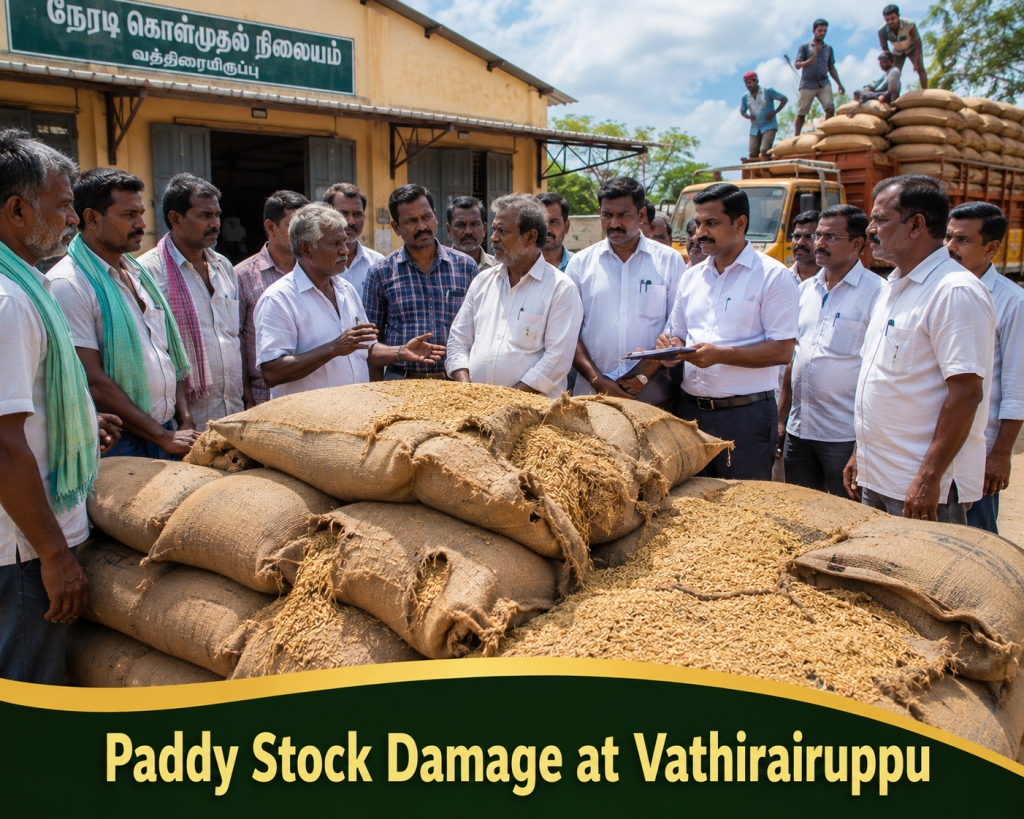
In July 2026, farmers and social activists in Vathirairuppu (Watrap), Virudhunagar district, raised concerns over paddy procured from farmers at a Direct Procurement Centre (DPC) remaining at the centre for more than 20 days without being shifted to government storage facilities. They urged the district administration and procurement authorities to move the stock quickly to prevent further deterioration and possible loss. What was the issue? The paddy had already been procured from farmers, but instead of being transported onward to government warehouses, the bags remained stacked at the procurement centre for an extended period. Farmers and activists said the prolonged storage at the centre was exposing the procured grain to avoidable risks, particularly because the facility was not considered adequate for long-term storage. The reports published on 18–19 July 2026 said the paddy had been lying there for over 20 days. Damage to paddy bags One of the major concerns was the condition of some of the gunny bags containing the paddy. Reports said that some bags had become damaged, allowing grain to spill out. The spilled grain reportedly attracted goats from nearby areas, which further contributed to the loss of the procured stock. This was particularly concerning because the paddy had already entered the government procurement system and therefore represented produce purchased from farmers using public procurement arrangements. Risk of rain and weather damage The longer the paddy remains exposed at an unsuitable procurement centre, the greater the risk of damage from rain and moisture. This concern was also seen earlier in June at a government paddy procurement centre near Vathirairuppu, where farmers complained that paddy was being exposed to rain and requested faster weighing and handling to prevent damage. Moisture can affect the quality of stored paddy and may subsequently create problems during transportation, milling and storage. Security concerns Farmers also raised concerns about security at night. According to the July reports, there was inadequate security at the procurement centre, leading farmers to worry that if bags were stolen during the night, identifying those responsible could become difficult. Thus, the issue was not limited to deterioration of grain. It also involved: Why shifting the stock to warehouses matters Farmers and social activists specifically requested that the procured paddy be shifted from the Direct Procurement Centre to government warehouses. Government warehouses are intended for safer and more systematic storage of procured agricultural commodities. Moving the stock promptly would help: The Tamil Nadu Civil Supplies Corporation operates Direct Procurement Centres specifically to facilitate the procurement of paddy directly from farmers across the state. Impact on farmers Although the paddy had already been procured, farmers remained concerned because damage to government-procured grain ultimately represents a loss of agricultural produce. Farmers depend on the procurement system not only for a guaranteed buyer but also for efficient handling of their harvested crop. Delays after procurement can undermine confidence in the system, particularly during periods when large quantities of paddy are being brought to procurement centres.

Agriculture News

Coconut Farmers Linked to e-NAM

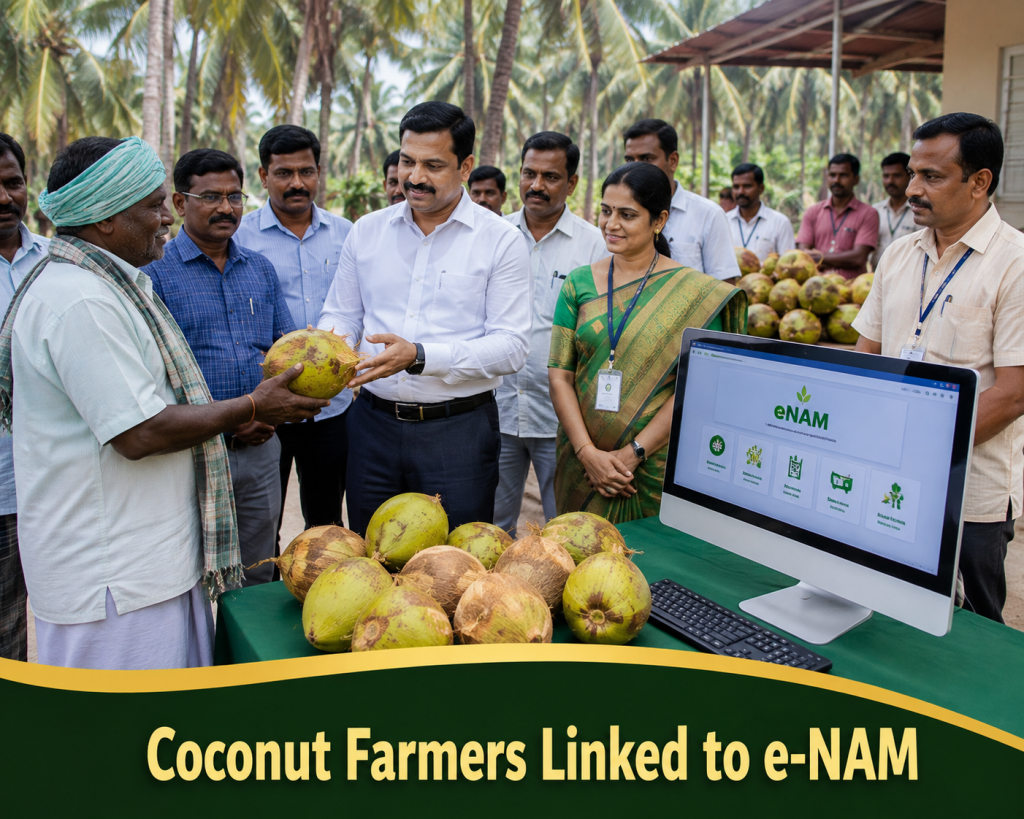
What happened? On 22 July 2026, the District Collector inaugurated an initiative to bring coconut farmers into the e-NAM trading system. The objective is to provide coconut growers with a more organised digital marketplace where they can connect with traders and explore better marketing opportunities. Instead of depending entirely on traditional local buyers or intermediaries, participating farmers can use the e-NAM platform to access a wider network of agricultural markets and potential buyers. What is e-NAM? Electronic National Agriculture Market (e-NAM) is a pan-India electronic trading platform designed to connect agricultural markets and improve transparency in agricultural marketing. It enables farmers, traders and agricultural market participants to access information about commodities, prices and trading opportunities through a digital system. The broader purpose is to make agricultural marketing more competitive and reduce some of the limitations associated with fragmented local markets. Why is this important for coconut farmers? Coconut farmers often face challenges such as: Linking coconut growers with e-NAM can help address some of these issues by giving farmers access to a broader market network. Direct connection with traders One of the key features of the initiative is the possibility of connecting farmers directly with traders through the digital marketplace. This can help farmers: The exact trading procedure can vary depending on the commodity, mandi and state-level implementation. Expected benefits 1. Better market access Farmers are no longer restricted solely to buyers operating in their immediate locality. e-NAM is designed to provide access to a much larger network of agricultural markets. 2. Improved price information Digital market information can help farmers understand prevailing prices before deciding where and when to sell their produce. 3. Greater transparency Electronic trading can make price discovery more transparent than purely informal negotiations between individual farmers and buyers. 4. More opportunities for direct trade Connecting growers with traders can potentially reduce unnecessary layers between the producer and buyer, although the actual number of intermediaries and costs depends on the local market arrangement. 5. Better bargaining opportunities When farmers have access to information about prices and more potential buyers, they may have stronger negotiating positions. 6. Support for organised coconut marketing Bringing coconut growers into a formal digital agricultural marketplace can help move coconut marketing toward a more organised system. Role of farmers For the initiative to work effectively, farmers generally need to participate through the relevant regulated agricultural market/e-NAM system and meet the applicable registration, quality, weighing, documentation and trading requirements. Farmers should also ensure that their produce meets the quality and grading requirements applicable to the particular market. Role of traders Traders participating in the e-NAM ecosystem can gain access to produce from a larger geographical area. For coconut buyers, this can make it easier to identify available supplies and participate in organised procurement. Possible impact on coconut cultivation The initiative could have a wider impact beyond simply selling the current crop. If farmers receive better market information and more reliable access to buyers, it could encourage them to: Importance of farmer groups Farmer Producer Organisations (FPOs) and farmer groups can play an important role in making digital marketing more effective. Instead of individual farmers trying to market very small quantities separately, farmers can potentially aggregate their produce. Larger aggregated quantities can make it easier to attract traders and reduce some marketing and transportation costs. What farmers should keep ready Farmers interested in participating should generally keep their: The exact documents and registration process should be confirmed with the local regulated market/e-NAM authorities, because implementation requirements can differ. Overall significance The 22 July 2026 initiative is therefore best understood as a digital market-access initiative for coconut growers. Its central objective is not simply to create another place to sell coconuts, but to connect farmers with a wider trading network and provide better access to market information and potential buyers. In simple terms:Coconut farmer → e-NAM market → wider trader network → better price discovery and market access. The initiative can become particularly valuable if farmers are organised into groups, produce is properly graded and aggregated, and traders from outside the immediate local market participate actively.

Agriculture News

Relief for Farmers Affected by Wildlife Damage

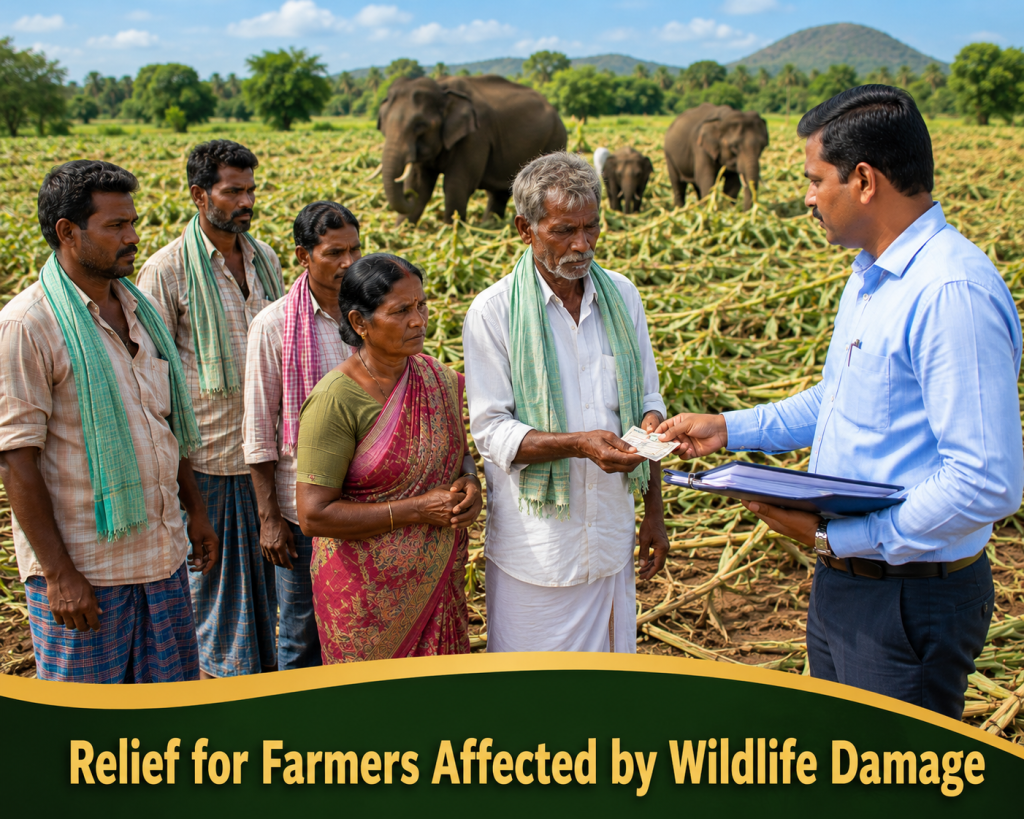
Tamil Nadu provides compensation to farmers whose agricultural crops are damaged because of human–wildlife conflict. The Tamil Nadu Forest Department specifically provides compensation for crop, livestock and property damage, in addition to relief for people injured or killed in wildlife incidents. What kind of wildlife damage is covered? The problem is particularly significant in areas bordering forests and wildlife habitats. Animals reported to cause crop damage include: Wild animals can damage crops by trampling, feeding on standing crops or destroying agricultural infrastructure. In Tamil Nadu, the Western Ghats districts have experienced particularly significant crop losses. Compensation available According to the Tamil Nadu Forest Department’s current policy information, crop damage caused by wildlife is eligible for compensation. The state has also created dedicated mechanisms to speed up payments. For crop damage, the reported compensation level is ₹25,000 per acre, although the actual amount can depend on the applicable rules, crop and assessment. Recent reporting also notes specific compensation rates for certain crops, such as ₹25 per damaged banana tree and ₹500 per coconut tree. Farmers’ organisations have argued that these amounts can be considerably lower than the actual economic loss—for example, losses from severe elephant or wild-boar damage can reach around ₹1 lakh per acre. How the compensation process works When wildlife damages a farm, the Forest Department can inspect the affected location and assess the damage. In Tamil Nadu, the government has taken steps to make payments faster by maintaining dedicated funds/accounts with District Forest Officers. The state says this has reduced the time required for compensation disbursement. For reported wild-boar crop damage, the government has specifically stated that Forest Department staff should make prompt field visits and that ex-gratia relief payments should be processed quickly. Monthly farmers’ grievance meetings are also used to address wildlife-related problems. New crop-insurance protection from Kharif 2026 There is also an important nationwide change under the Pradhan Mantri Fasal Bima Yojana (PMFBY). The Union Government has recognised wild-animal attacks as a localised risk/add-on cover under PMFBY. From Kharif 2026, states can notify wildlife-related crop losses for individual assessment and provide this cover at the state’s cost. Under the new PMFBY framework: This is significant because wildlife damage was previously generally excluded from PMFBY on the basis that it was considered a preventable risk. The new provision allows states to add wildlife damage as a specific cover. Preventive support for farmers in Tamil Nadu Tamil Nadu’s 2026–27 Agriculture Budget has also introduced measures aimed at preventing wildlife damage rather than only paying compensation. The government has allocated ₹7.35 crore for preventive measures, including: Overall objective The relief programme has two major objectives: Immediate relief: compensate farmers after their crops, livestock or property are damaged. Long-term prevention: reduce human–wildlife conflict through fencing, trenches, wildlife monitoring, habitat and fodder development, water management and other protective measures.

About
News
Home
Magazine
Contact